

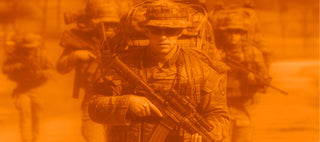
TGA-Listed, Batch-Tested Topical Pain Relief for Royal Australian Corps of Signals Soldiers.
Medically reviewed by: Dr Steve Andrews, MBBS FRACS FAOrthA MCIME (ABIME)
Signallers in the Royal Australian Corps of Signals (RA Sigs) carry both physical and cognitive loads: radios and batteries, body armour, weapons, long days on their feet, plus the constant mental work of keeping communications running. Around major events such as the Caduceus Cup during the Corps’ 100-year “Certa Cito 100” celebrations at Gallipoli (Enoggera) Barracks, training tempo and load carriage often increase, along with everyday muscle and joint aches.
For minor, activity-related aches on intact skin, TGA-listed external analgesic medicines such as Rygg HEATE® thermo-performance cream and Rygg KHULE® cryoactive recovery gel can provide temporary relief of mild muscle and joint pain when used exactly as directed on the Australian label. They do not treat injuries, cure disease, or replace Defence medical care.
For soldiers and other tested personnel, choosing TGA-listed, Informed Sport–certified, batch-tested products that are screened for World Anti-Doping Agency (WADA)–prohibited substances and manufactured under audited quality systems can help reduce (but never fully remove) the risk of inadvertent anti-doping rule violations (Mathews, 2017; Jagim, Camic, Harty, & Kerksick, 2023; Sport Integrity Australia, n.d.). Recording batch codes and following Sport Integrity Australia guidance are part of a “clean product” approach that aligns with Defence expectations.

1. Service, signals and sore muscles: the context
The Royal Australian Corps of Signals has spent a century at the sharp end of military communications and information systems, evolving from line-laying and radio to cyber, space, and complex digital networks. Signallers enable command and control in environments that are physically demanding, cognitively intense and often time-critical.
Events like the 2025 Caduceus Cup, part of the Corps’ centenary “Certa Cito 100” program, showcase this blend of physical capability, teamwork and technical excellence. Whether it is:
- Loaded marches
- Obstacle events
- Section competition activities
- Field scenarios with rapid setup and teardown of comms
RA Sigs personnel are still soldiers first, with load carriage, prolonged standing and repetitive tasks all contributing to musculoskeletal stress.
International and Australian Defence Force (ADF) research shows that musculoskeletal injuries are among the most common reasons for limited duty and reduced readiness in military personnel. Load carriage, especially above approximately 30–40 kg, is strongly associated with soft-tissue injuries and stress fractures of the spine, hips, knees, ankles and feet (Schram et al., 2019; Fox et al., 2020; Stannard et al., 2025). Many serving members and veterans live with persistent musculoskeletal pain, which can affect sleep, mood, function and long-term wellbeing (Wolski et al., 2023).
Within this context:
- Evidence-based training loads
- Strength and conditioning
- Appropriate boots and packs and early access to physiotherapy and medical care are far more important than any cream or gel. External analgesics are one small, label-aligned piece of a broader recovery toolkit.
2. What Rygg HEATE® and Rygg KHULE® are (and are not)
In Australia, warming and cooling liniments containing active ingredients such as menthol and methyl salicylate are generally regulated as listed medicines on the Australian Register of Therapeutic Goods (ARTG). When used as directed, they may provide temporary relief of mild aches and pains of muscles and joints, for example, after day-to-day physical work, sport or training (Mansour, Nguyen, & Brandt, 2024).
2.1 TGA-aligned positioning
Within this framework, Rygg HEATE® and Rygg KHULE® can be accurately described as:
Rygg HEATE® thermo-performance cream
A warming external analgesic medicine used to:
- Decrease, reduce or relieve mild joint aches and pains, and
- Help enhance, improve, promote or increase muscle performance, endurance and stamina, when applied in thin layers to intact skin and used as directed.
Rygg KHULE® cryoactive recovery gel
A cooling external analgesic medicine used to:
- Decrease, reduce or relieve mild joint inflammation and swelling,
- Help decrease, reduce or relieve symptoms of muscle sprain and strain, and
- Aid or assist post-exercise recovery, when applied in thin layers to intact skin and used as directed.
These are symptom-relief claims, not cures for structural injuries or chronic disease.
They do not:
- Diagnose or treat specific injuries (e.g., ligament tears, stress fractures)
- Replace prescribed medicines, physiotherapy or Defence medical assessment
- Guarantee that a soldier will pass a drug test
- Provide performance enhancement beyond the indications allowed by the TGA listing
- This distinction is central to TGA-compliant communication and to maintaining credibility in Defence settings.
3. How Rygg HEATE® and Rygg KHULE® work (sensations and mechanisms)
From a neuroscience and pharmacology perspective, warming and cooling topicals act largely by modulating sensory input from the skin and superficial tissues, rather than “fixing” deeper structures.
3.1 Rygg HEATE®: warming comfort before movement
Rygg HEATE® ™ contains methyl salicylate in a non-greasy cream base. Methyl salicylate is a salicylate ester classified as a counterirritant in external analgesic monographs. At label-specified concentrations, it:
- Produces a mild warming or tingling sensation on intact skin
- Stimulates cutaneous sensory receptors, creating a new sensory input that can compete with deeper pain signals (Guo et al., 2022)
- Aligns with the gate control theory of pain, where non-painful sensory input (such as warmth or pressure) can inhibit some pain transmission at the level of the spinal cord
- A small proportion of methyl salicylate may be absorbed transdermally and converted to salicylic acid, but systemic exposure is generally low when the product is used according to directions (Guo et al., 2022; Mansour et al., 2024).
In practical terms, for a signaller with stiff knees before PT or a mildly aching lower back before a day of standing radios or field deployment:
- Rygg HEATE® can be applied in a thin layer to intact skin over the area of mild ache
- The warming sensation can make it more comfortable to move through dynamic warm-ups and light activity
- Within its indication, it can help relieve mild joint aches and support muscle endurance and performance during everyday tasks. It does not repair cartilage, ligaments or discs, and should never be used to “tough out” severe pain that warrants medical review.
3.2 Rygg KHULE®: cooling comfort after load
Rygg KHULE® contains menthol and other cooling ingredients in a fast-absorbing gel base. Menthol activates cold-sensing ion channels on peripheral sensory neurons, leading to a perceived cooling sensation (Mansour et al., 2024). Key points:
- Skin may feel cooler, but core temperature does not meaningfully drop - The effect is sensory and temporary, often described as soothing or “taking the edge off” soreness
- For minor sprain/strain symptoms or post-exercise muscle soreness, a cooling gel can be one layer alongside rest, graded loading and rehabilitation (Guo et al., 2022; Mansour et al., 2024)
For RA Sigs, Rygg KHULE® is particularly relevant:
- After loaded marches or Caduceus Cup events, when calves, quads and lower back feel mildly inflamed
- After field days, where shoulders and upper limbs are fatigued from repeated antenna setups, cable runs and carrying radios. In hot, humid environments, The cooling sensation from Rygg KHULE® should be explicitly framed as comfort after activity, not as a treatment for heat stress. Heat-illness management still relies on rest, shade, active cooling, hydration and adherence to ADF heat policies (Resources Regulator NSW, 2022; Department of Mines, Industry Regulation and Safety [DMIRS], 2023).
4. A field-ready, label-aligned routine (Caduceus Cup example)
The following is a hypothetical example of how Rygg HEATE® and Rygg KHULE® could be used around a Caduceus Cup-style event. It is not a substitute for ADF medical guidance. Soldiers should always follow unit SOPs and medical advice.
4.1 Before activity: warm-up plus optional Rygg HEATE®
Step 1: Brief red-flag screen
If any of the following are present, this is not a job for a cream:
- Recent significant trauma, fall, collision or suspected fracture
- Inability to bear weight or use a limb
- Visible deformity or rapidly increasing swelling
- Severe pain at rest
- Neurological symptoms (numbness, weakness, pins and needles)
- Systemic features (fever, chest pain, shortness of breath)
- These require urgent assessment by a unit medical officer, medic or emergency care.
Step 2: Dynamic warm-up (5–10 minutes)
- Light jog or brisk walk around the training area
- Dynamic mobility: leg swings, hip circles, marching drills, scapular squeezes, arm circles
- Activation drills for core and gluteal muscles, consistent with Army S&C guidance
Step 3: Optional Rygg HEATE® on intact skin
- Apply a thin layer of Rygg HEATE® to intact skin over areas of familiar mild aches (for example, calves, lower back, shoulders)
- Avoid broken or irritated skin, rashes, sunburn or infection sites
- Wash hands thoroughly after application
- Allow the cream to dry fully before donning uniforms, body armour, webbing or PPE
- Do not apply under tight bandages or use simultaneously with external heat (heat packs, very hot showers over the area), as misuse of some topicals has been linked to rare but serious burns (U.S. Food and Drug Administration [FDA], 2012; Desai et al., 2021)
Here, HEATE™ is used to decrease mild joint aches and support muscle performance and endurance through comfort and warmth, not to hide significant pain or circumvent load management.
4.2 After activity: cool-down plus optional Rygg KHULE®
Step 1: Gradual cool-down (5–10 minutes)
- Light walk or easy cycling if available
- Gentle range-of-motion for hips, knees, ankles, shoulders and spine
- Deep breathing and down-regulation to transition out of “high alert” mode
Step 2: Optional Rygg KHULE® on intact skin
- Apply a thin layer of KHULE™ to intact skin where mild, activity-related aches are noticed (for example, calves, forearms, shoulders, lower back)
- Avoid open wounds, blisters, rashes or sunburned skin
- Allow the gel to dry fully before putting on socks, boots, compression garments or uniforms
- Wash hands after use
- Stop use and seek medical advice if persistent redness, blistering or increasing pain occurs at the application site (FDA, 2012; Desai et al., 2021)
Within its indication, Rygg KHULE® can help reduce mild joint inflammation and swelling, relieve symptoms of minor sprain/strain, and assist post-exercise recovery, again, within the limits of a topical external analgesic.
Step 3: Monitor over the next 24–48 hours
- If pain settles with rest, mobility and basic measures, self-management is often sufficient
- If pain worsens, persists beyond a few days, or limits essential duties, the soldier should escalate to the medical chain early rather than masking symptoms with repeated topical use

5. Drug testing, Informed Sport and “clean products” in Defence
For ADF members, the consequences of a positive drug test extend beyond sport suspensions. Illicit drug use and anti-doping rule violations can affect:
- Career progression
- Security clearances
- Deployment eligibility
- Fitness to command and reputation
Sport Integrity Australia repeatedly highlights that supplements are a significant source of inadvertent violations, often due to undeclared WADA-prohibited substances in poorly regulated products (Mathews, 2017; Jagim et al., 2023; Sport Integrity Australia, n.d.).
Topical medicines like Rygg HEATE® and Rygg KHULE® are not in the same high-risk category as stimulant-heavy pre-workouts or “test boosters”, but principles of risk reduction still apply.
5.1 Why TGA listing and Informed Sport certification matter
For Rygg products used by RA Sigs soldiers:
- They are TGA-listed medicines, which means:
- Only permitted active ingredients at specified strengths are used
- Manufacturing follows Good Manufacturing Practice (GMP)
- They must meet quality, labelling and advertising standards and carry an AUST L number
They are Informed Sport–certified, which means:
- Every certified batch is tested for a broad panel of WADA-prohibited substances in ISO/IEC 17025-accredited laboratories
- Manufacturing sites undergo audits and quality checks to minimise cross-contamination (Mathews, 2017; Jagim et al., 2023)
This two-layer approach, regulatory listing plus independent batch testing, provides a more transparent, defensible option for soldiers than unregulated creams or overseas imports.
5.2 Practical “clean product” steps for RA Sigs soldiers
Key behaviours that align with Sport Integrity Australia’s guidance (Sport Integrity Australia, n.d.) include:
- Prefer regulated, batch-tested products
Choose TGA-listed, Informed Sport–certified medicines like Rygg HEATE® and Rygg KHULE® over unknown brands or internet imports.
- Check the logo and record the batch code
- If the product carries the Informed Sport logo:
- Confirm the product and batch number on the Informed Sport website or app
- Take clear photos of the pack, label and batch code and store them securely
- Keep receipts or issue paperwork where possible
- Avoid high-risk supplement categories
Products marketed for “extreme fat loss”, “anabolic muscle gain”, or “hardcore pre-workout” have a disproportionate history of contamination and adverse findings (Mathews, 2017; Jagim et al., 2023). A conservative, Defence-aligned approach is to avoid these entirely.
- Follow Defence policies and ask early
When in doubt, soldiers should speak with Defence health professionals, their chain of command, or integrity units before starting new supplements or medicines.
Even with TGA listing and Informed Sport certification, messaging should remain honest:
Rygg HEATE® and Rygg KHULE® are TGA-listed external analgesic medicines and each Informed Sport–certified batch is tested for a panel of WADA-prohibited substances. This helps reduce the risk of inadvertent positives, but no product is completely risk-free. ADF members remain responsible for what they use and should always follow Defence policy and seek professional advice if unsure.

6. Safety, TGA Advertising Code and when to see Defence health
The Therapeutic Goods Advertising Code requires advertising for listed medicines to be accurate, balanced and not misleading, and to avoid discouraging appropriate medical care. For Army-facing messaging about Rygg HEATE® and Rygg KHULE®, that means:
Stick to permitted indications
Use phrasing such as “temporary relief of mild aches and pains of muscles and joints on intact skin”, or the specific TGA-cleared wording for each product, not disease cures.
Highlight correct use and limitations
- For external use only
- Apply to intact skin only, avoiding eyes and mucous membranes
- Do not bandage tightly or use with external heat sources
- Stop use if irritation develops and seek medical advice if symptoms persist or worsen (FDA, 2012; Desai et al., 2021)
- Keep out of reach of children
Promote early access to Defence health services
Encourage soldiers with:
- Trauma, falls or suspected fractures
- Severe or worsening pain
- Neurological signs (numbness, weakness)
- Fever, systemic symptoms or red-flag back pain to see an Army medical officer, medic or physiotherapist promptly, not to repeatedly self-treat with topicals.
In short, for RA Sigs soldiers at Caduceus Cup and beyond, HEATE™ and KHULE™ can sit alongside strength and conditioning, load management, hydration, sleep and Defence medical care as modest, label-aligned tools for day-to-day musculoskeletal comfort, not as miracle fixes or performance enhancers.
Conclusion
RA Sigs soldiers operate at the intersection of physical robustness and technical mastery. Preserving that capability over a career depends on:
- Smart training loads and structured physical preparation
- Early, honest reporting of pain and injury
- Access to Defence health services and evidence-based rehabilitation
- Thoughtful choices about every product that goes in or on the body
Within this bigger picture, Rygg HEATE® and Rygg KHULE® offer:
- TGA-listed external analgesic options for temporary relief of mild muscle and joint aches on intact skin when used as directed
- Warming (HEATE™) and cooling (KHULE™) sensory profiles that many soldiers find comfortable before or after activity
- Non-greasy, fast-absorbing bases that fit under uniforms and PPE without feeling slippery
- Informed Sport–certified, batch-tested assurance, aligned with Sport Integrity Australia’s risk-reduction principles and Defence expectations for clean products
They do not treat injuries, cure disease, or guarantee a clean test result. But used correctly, recorded carefully and integrated into a broader Defence-aligned approach to training and recovery, they can be a practical, regulation-aware tool to help signallers stay swift and sure on sore muscles.
Always read the label and follow the directions for use. If symptoms persist, talk to your health professional.
References (APA)
American Academy of Dermatology. (2021). How to test skin care products at home. AAD.
Desai, R., et al. (2021). From chemical burn to below-knee amputation: Case report of severe injury after topical pain reliever use. Journal of Burn Care & Research, 42(6), 1120–1124.
Fox, B. D., et al. (2020). Biomechanics of military load carriage and resulting musculoskeletal injury: A review. Orthopaedic Journal.
Guo, J., et al. (2022). Safety and efficacy of compound methyl salicylate liniment for soft-tissue pain: A real-world study. Frontiers in Pharmacology, 13, 1015941.
Jagim, A. R., Camic, C. L., Harty, P. S., & Kerksick, C. M. (2023). Prevalence of adulteration in dietary supplements and recommendations for safe supplement practices in sport. Frontiers in Sports and Active Living, 5, 1239121.
Mansour, D. Z., Nguyen, B. T., & Brandt, N. J. (2024). Over-the-counter topical analgesics: Benefits and risks for older adults. Topics in Pain Management, 40(3), 1–7.
Mathews, N. M. (2017). Prohibited contaminants in dietary supplements. Current Sports Medicine Reports, 16(6), 413–418.
Resources Regulator NSW. (2022). Managing heat at NSW mines and petroleum sites. NSW Government.
Schram, B., et al. (2019). Injuries in Australian Army full-time and part-time personnel. BMC Musculoskeletal Disorders, 20, 12.
Sport Integrity Australia. (n.d.). Supplements and sports nutrition. Sport Integrity Australia.
Stannard, J., et al. (2025). Musculoskeletal injury in Australian infantry personnel. Military Medicine, 190(3–4), e682–e691.
U.S. Food and Drug Administration. (2012). Drug Safety Communication: Rare cases of serious burns with the use of over-the-counter topical muscle and joint pain relievers. FDA.
Wolski, C. L., et al. (2023). Musculoskeletal complaint epidemiology in Australian Defence Force trainees. BMC Musculoskeletal Disorders, 24, 123.